Starting therapy for anxiety is rarely as smooth as people imagine. You finally make the call, you show up, you talk — and then you spend the next week wondering whether it's working, whether you said the wrong thing, and whether you should have just tried harder on your own. Some of that doubt is normal. But a handful of common mistakes quietly stall progress for months, and most of them are easy to fix once you know what to look for.
Expecting the therapist to fix you
Anxiety treatment isn't a procedure performed on you. It's closer to physiotherapy: the professional knows which muscles to work and how to progress the load, but the strength only comes from you doing the reps.
Your therapist brings real expertise — how anxiety maintains itself, which techniques fit your particular pattern, how to structure exposure so it's challenging but not overwhelming. What they can't do is live your Tuesday. If you leave each session with a warm feeling and no plan, you'll feel stuck by week six. Ask directly before you go: what am I doing with this before we meet again?
Treating homework as optional
Fifty minutes a week is a tiny slice of your life. The exercises between sessions are where the actual change happens, which is why therapists call them practice, not homework. It's the difference between talking about a fear and testing it.
What this work often looks like:
- Writing down anxious thoughts and the situations that triggered them
- Practicing a grounding or breathing skill when you're mildly anxious, not only mid-panic
- Approaching something you've been avoiding, in small deliberate steps
- Noticing and recording what actually happened versus what you predicted
If you didn't do it, say so. A missed exercise is useful information, not a character flaw. Maybe the step was too big, or you didn't understand the point, or the week fell apart. All three are worth ten minutes of discussion. Pretending you did it wastes the one hour you paid for.
Quitting during the dip
It's common to feel worse before you feel better. Once you start naming fears out loud and deliberately walking toward the things you've avoided, your anxiety has more to work with for a while. That uptick is usually a sign the treatment is doing something, not a sign it's failing.
This is where people quietly stop booking sessions. Give it a fair, consistent run before you judge it — and if you're discouraged, bring that to the session instead of disappearing. "I feel worse than when I started" is one of the most productive sentences you can say to a therapist. They can adjust the pace, break the work into smaller pieces, or explain what stage you're in.
Editing yourself in session
People often arrive with a polished version of the week: the anxiety mentioned lightly, the drinking left out, the fact that they stopped taking their medication never brought up. The therapist can only work with what they know.
The same goes for performing as a good client. If a technique felt absurd or did nothing, say that. If your therapist's tone grates on you, say that too. Good clinicians would rather hear it than guess. You are not there to be agreeable; you're there to get better.
Using coping skills as a way to avoid
Breathing exercises, distraction, journaling — all genuinely useful. But there's a trap. These tools can become a more respectable form of avoidance.
Picture someone with social anxiety who sits in the car outside a party doing a breathing exercise, feels calmer, and then drives home. The breathing worked. The anxiety also won, because the situation was never tested. The point of a coping skill is to help you stay in the difficult moment long enough for your body to learn that the danger isn't real — not to make it comfortable to leave.
Ignoring the body basics
Anxiety doesn't live only in your thoughts. Five hours of sleep, four coffees before noon, two drinks to wind down, and no movement all week keep your nervous system primed to fire. You can do beautiful cognitive work in session and then hand your body a stack of reasons to stay on edge.
Don't overhaul everything at once. Pick one: a consistent wake time, caffeine only before lunch, a short walk most days. Then mention it to your therapist so the two of you can see whether it changes the picture.
Never asking whether the fit is right
Fit matters. You don't need to be friends with your therapist, but you should be able to be honest without managing their feelings. If you've given it several sessions and still can't say the real thing, that's worth naming — and possibly worth changing.
Questions worth asking early:
- How do you usually work with anxiety, and what does the treatment look like week to week?
- How will we know it's helping, and what should I be doing between sessions?
- What happens if I feel worse before I feel better?
A therapist can be perfectly competent and still a poor match for you. Switching isn't failure, and it isn't rude. It's just finding the right tool for the job.
Getting more out of the first few months
Come to each session with three things: a situation that went badly, a question you don't know the answer to, and one thing that worked. Take notes during the session, because anxious brains drop details. Do the task you least want to do first in the week, while your motivation from the session is still fresh.
Every six to eight weeks, step back and ask what has actually changed: situations you now enter, thoughts you catch earlier, physical symptoms that come down faster. Progress in anxiety treatment is often invisible from the inside.
Finally, be patient with the timeline. Some people notice relief in a few weeks; others need months of steady work, and some benefit from combining therapy with medication or other support. This is general guidance rather than medical advice — if anxiety is disrupting your sleep, work, relationships, or sense of safety, talk with a doctor or a qualified mental health professional about what's appropriate for you.
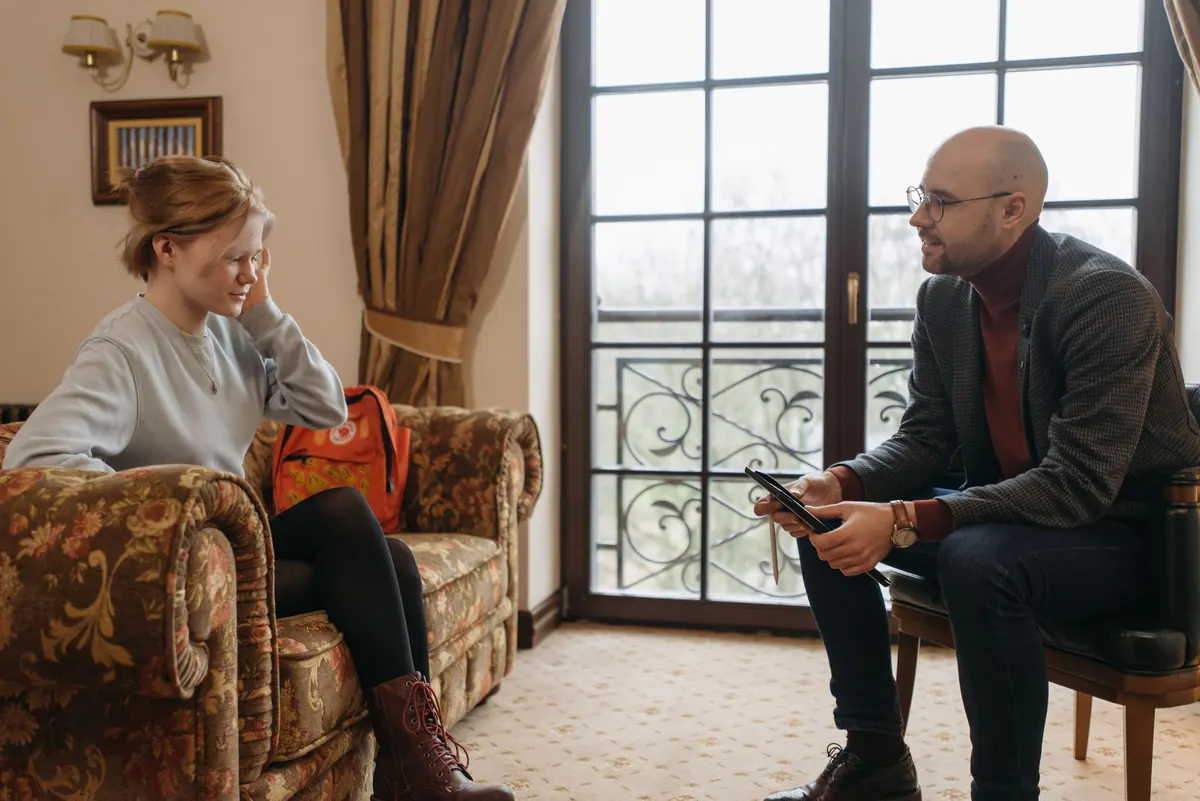
Photo: Pavel Danilyuk / Pexels